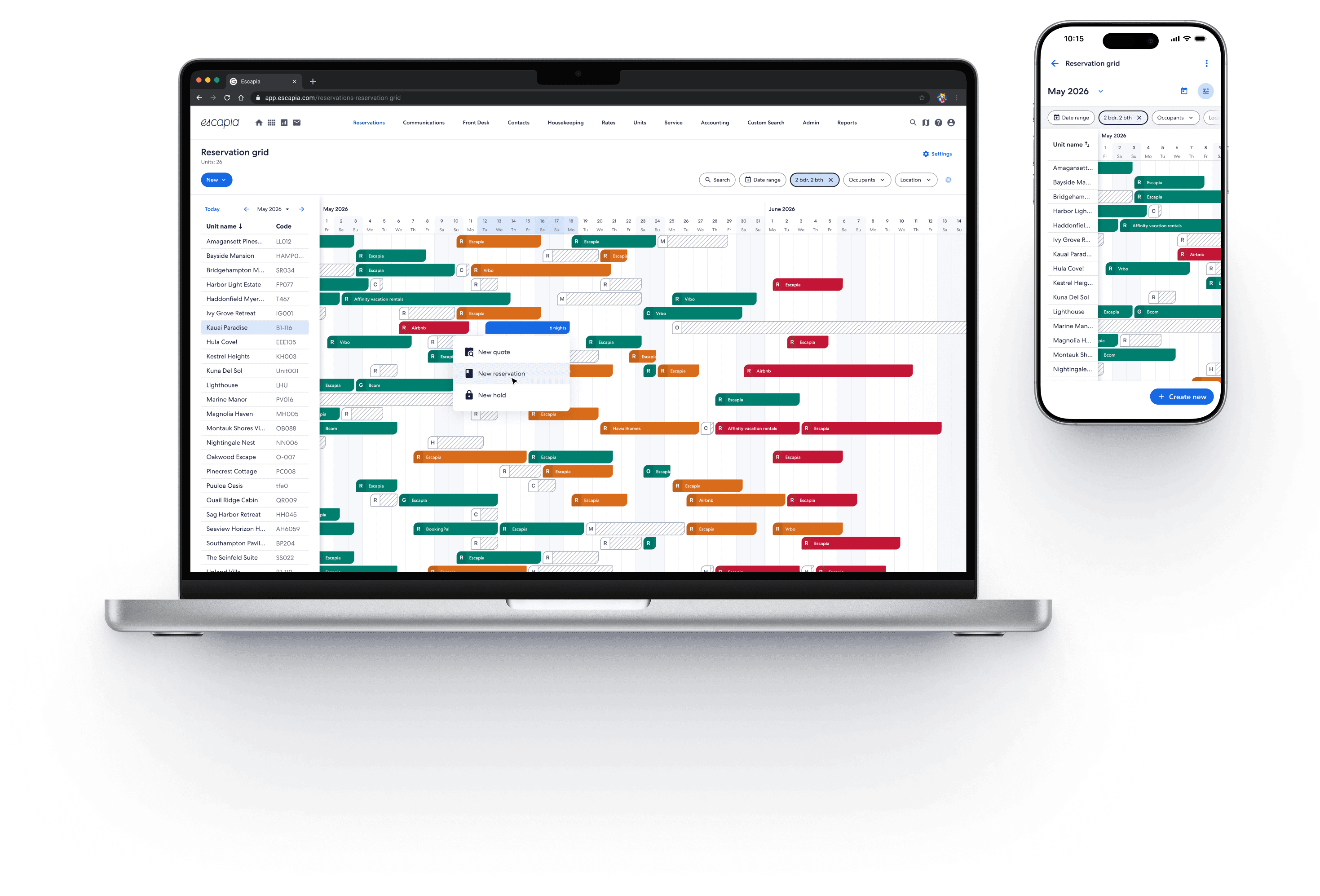
Redesign of a core workflow - reservation calendar for the B2B vacation rental platform, focusing on simplifying flows, modernizing UI with 15% reduction in churn due to UI/UX by 2026.
Company
Escapia (Expedia Group)
Date
2024 - 2025
Team
Senior UX Designer (me), Product Manager(1), Development team(6), UX Researcher (1)
The Reservation Grid is Escapia’s most-used workflow, where property managers visualize occupancy, manage holds, and act on bookings.
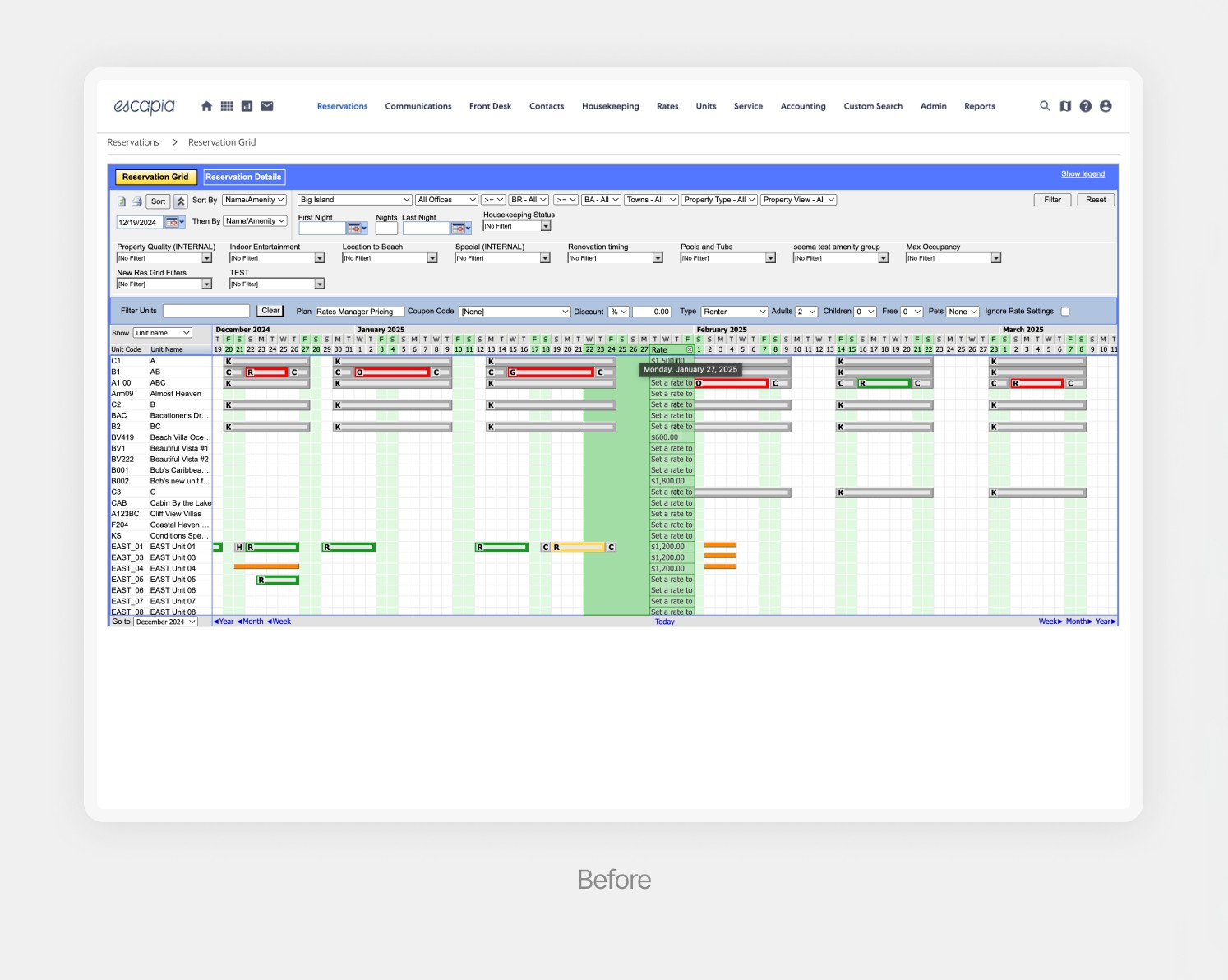

The old UI lacked intuitive visuals and efficient filtering, slowing down reservationists when they needed to quickly find availability or guest info.
Staff had to hunt through multiple screens for details and risked double-booking properties due to poor visibility.
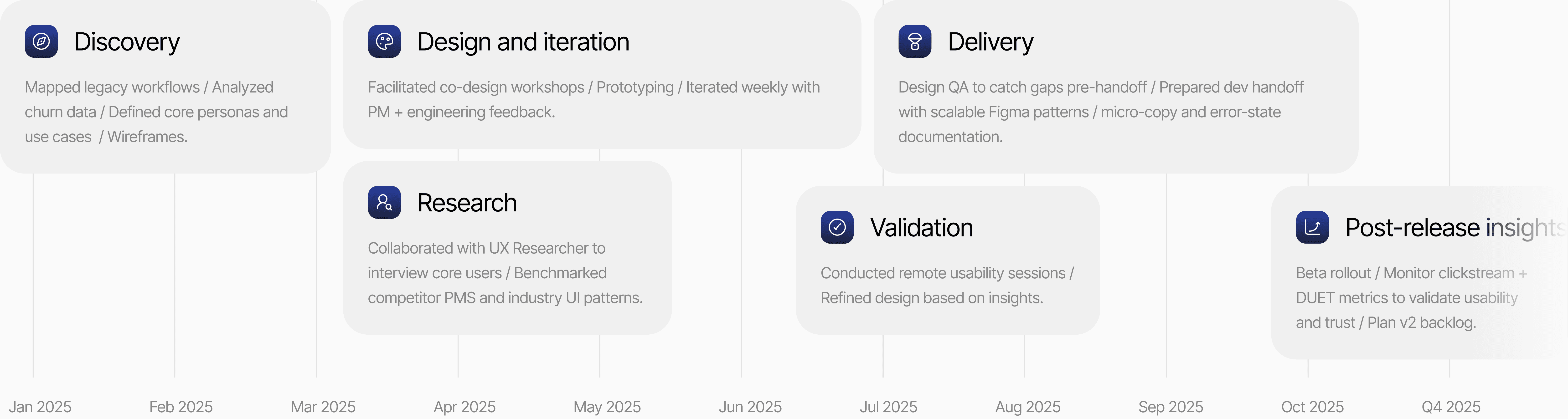
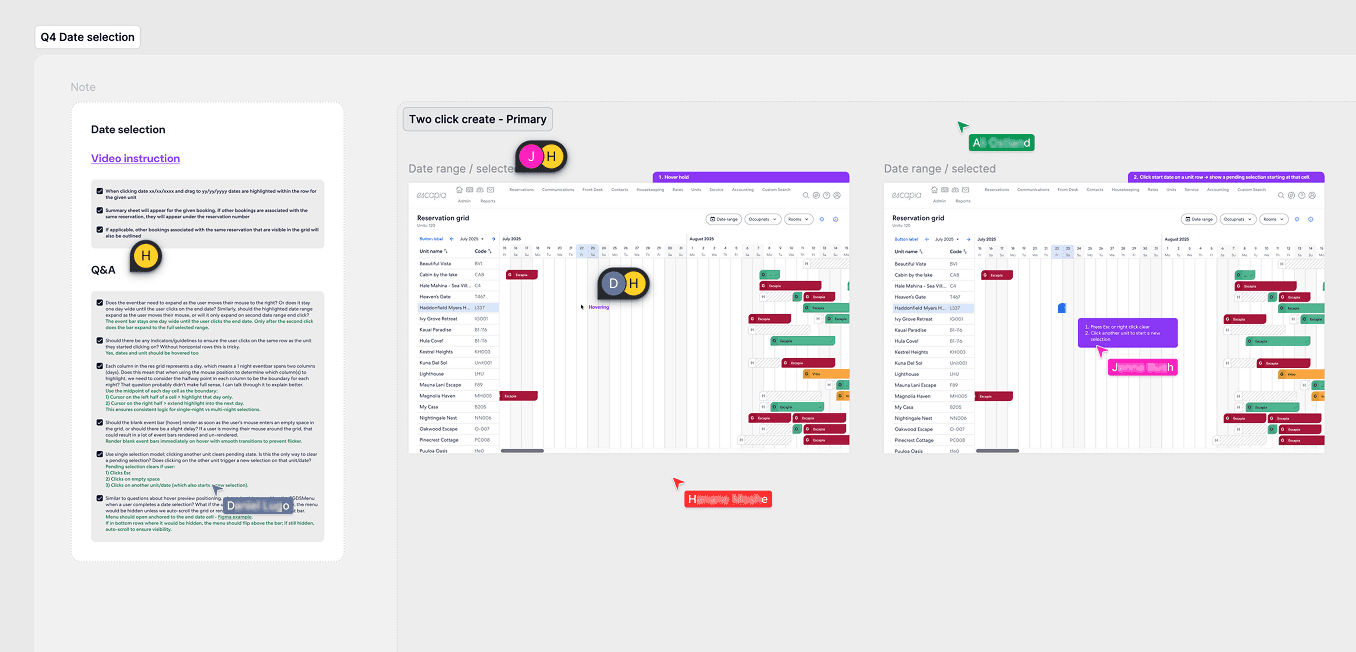
We identified key use cases and set three main milestones: visual calendar, interaction, and filters. The redesign will move through each phase in order, allowing us to focus on what matters most at each step.
Wireframes
With the strategy set, I sketched display scales and tested information density. I explored improving search and filters by examining how legacy data models handle modern interactions.
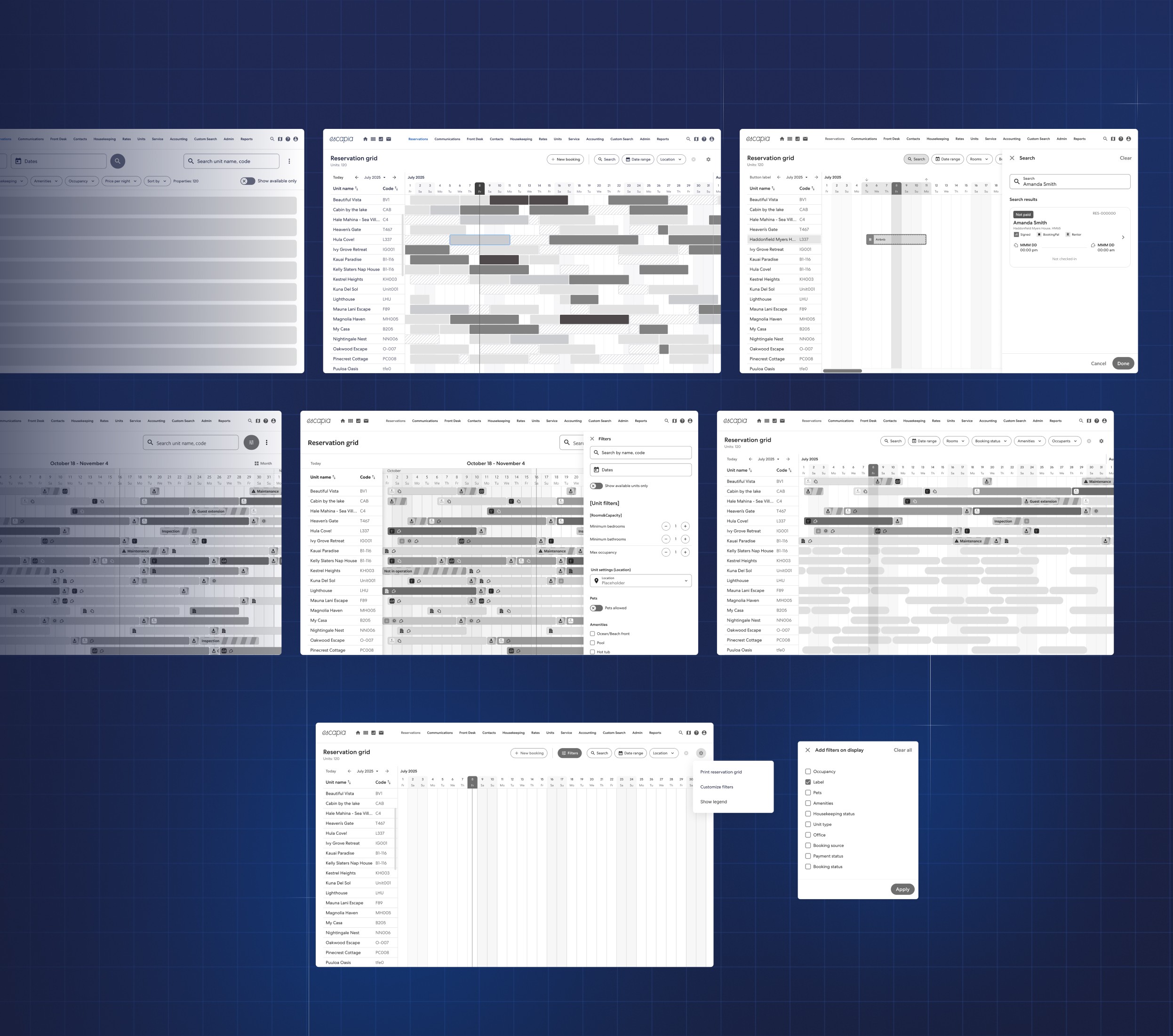
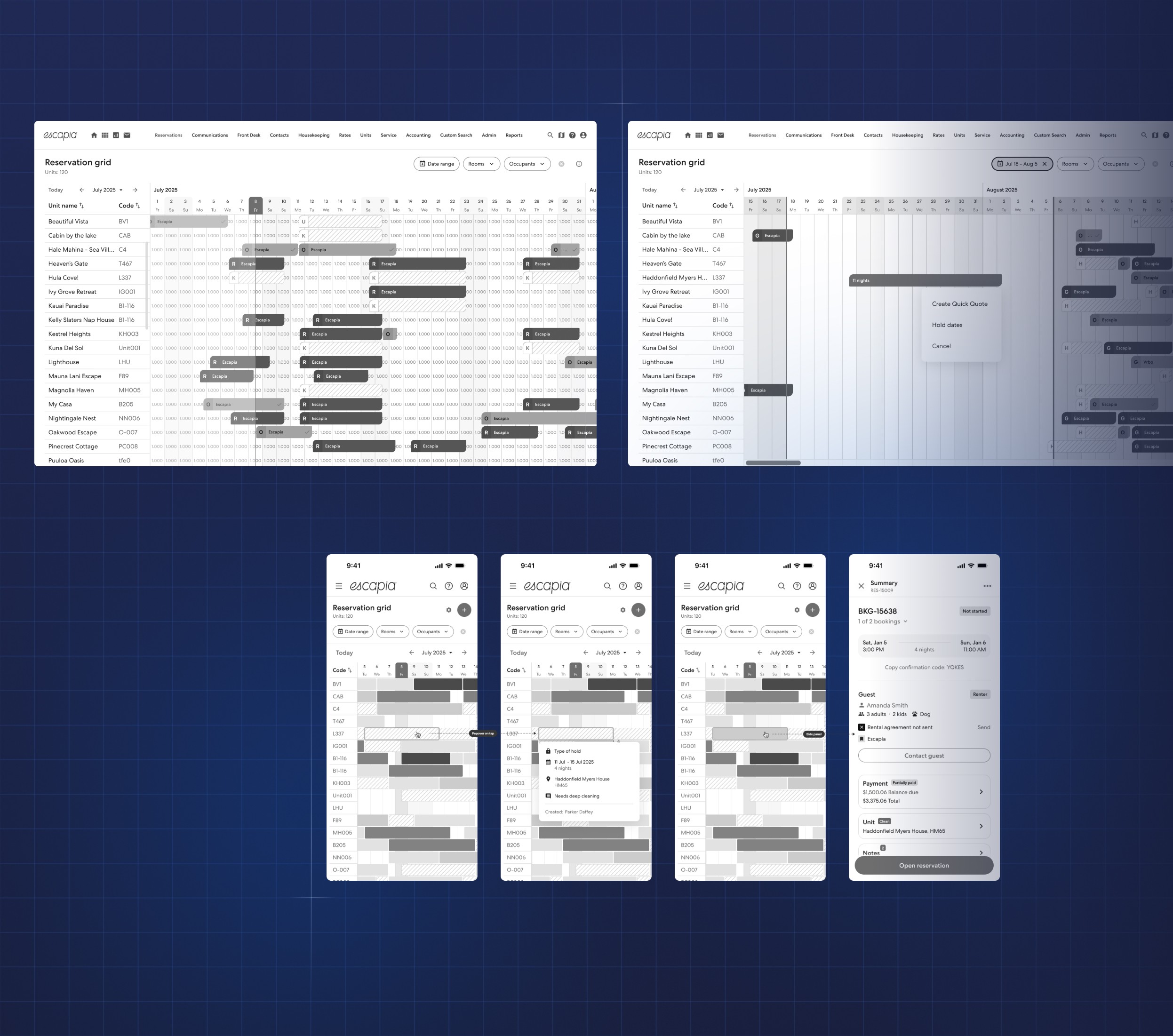
We conducted 2 user studies to refine data density and hierarchy before design.
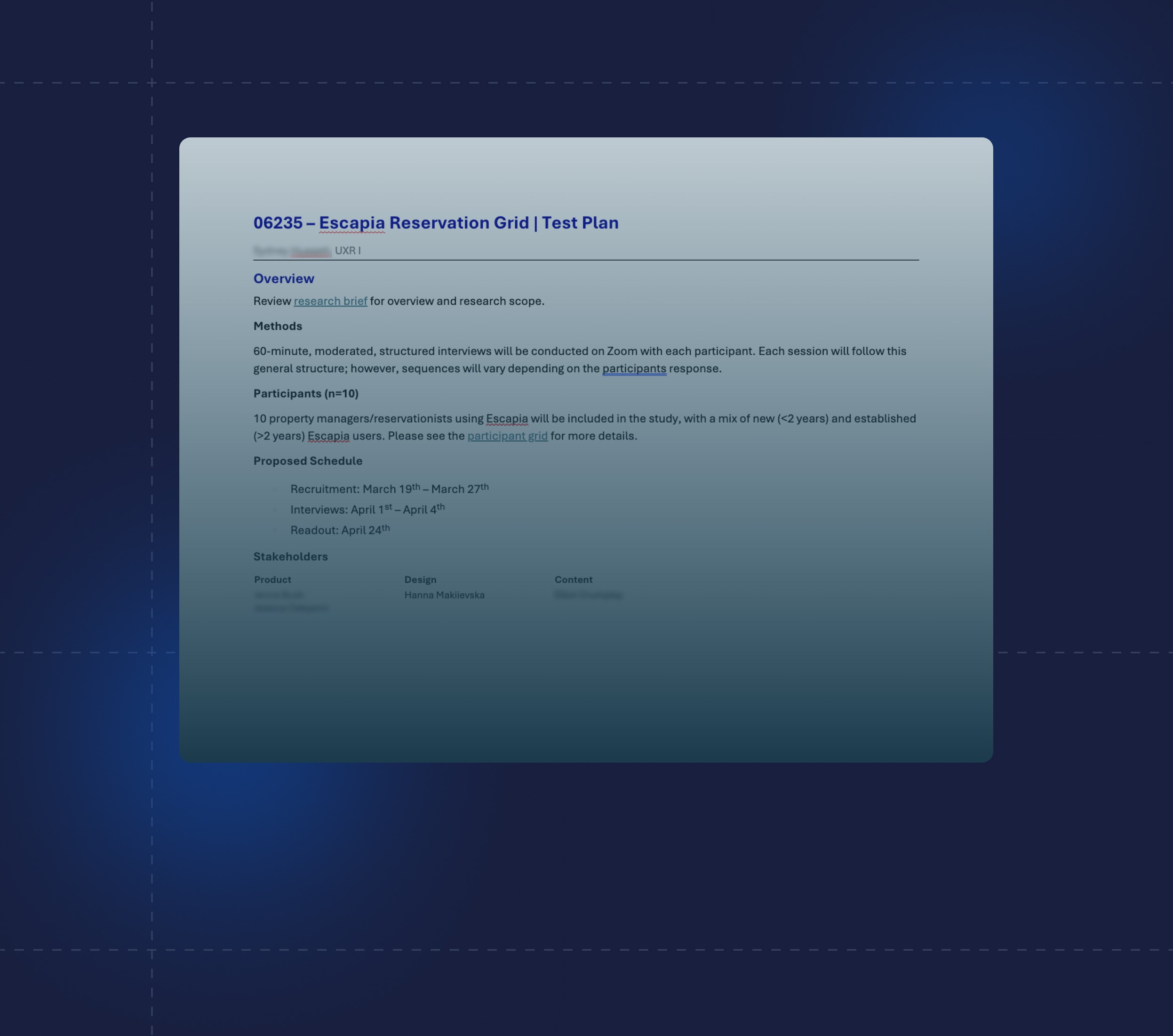
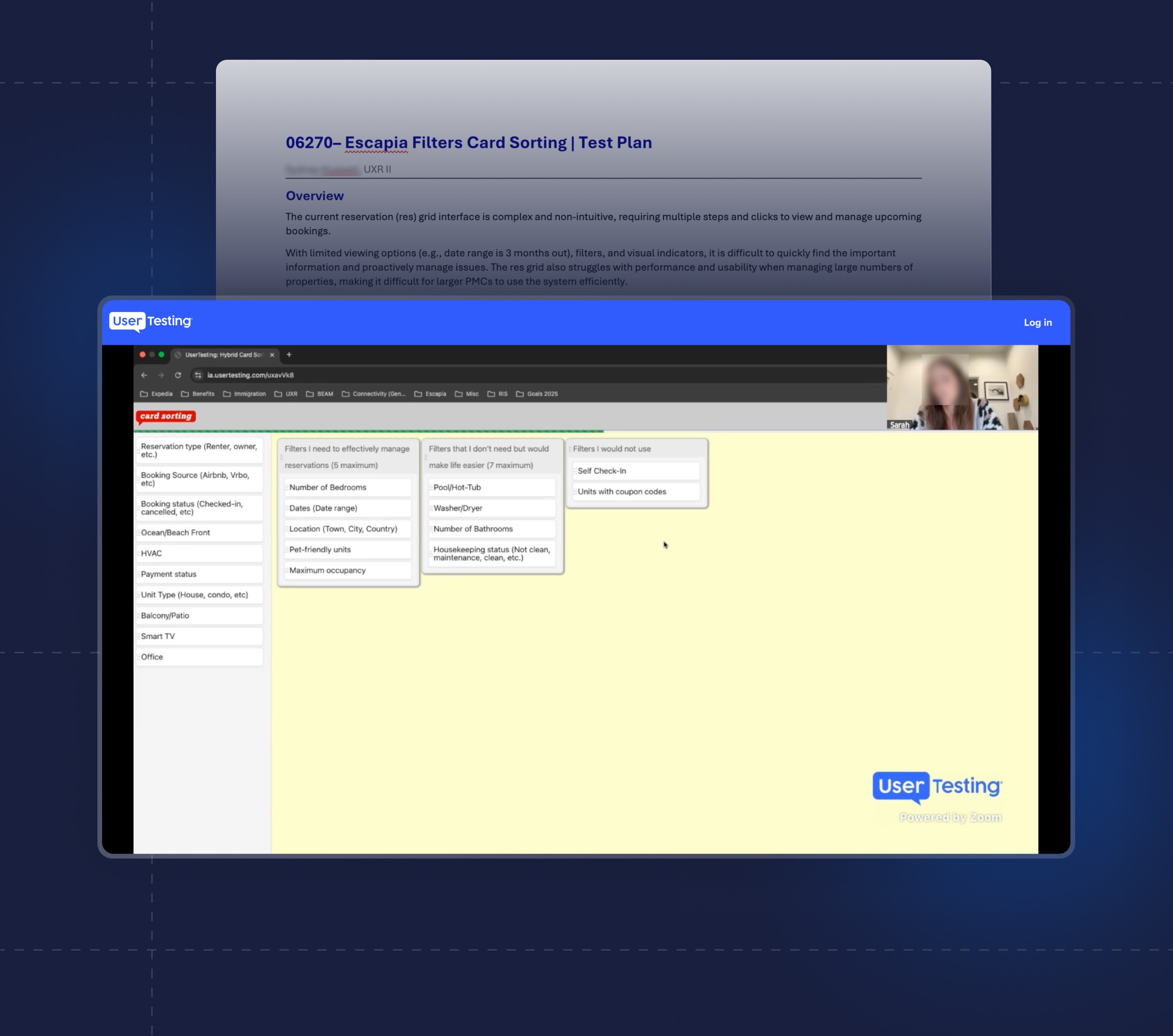
I worked with a UX Researcher to plan and conduct two user studies that guided the Reservation Grid redesign:
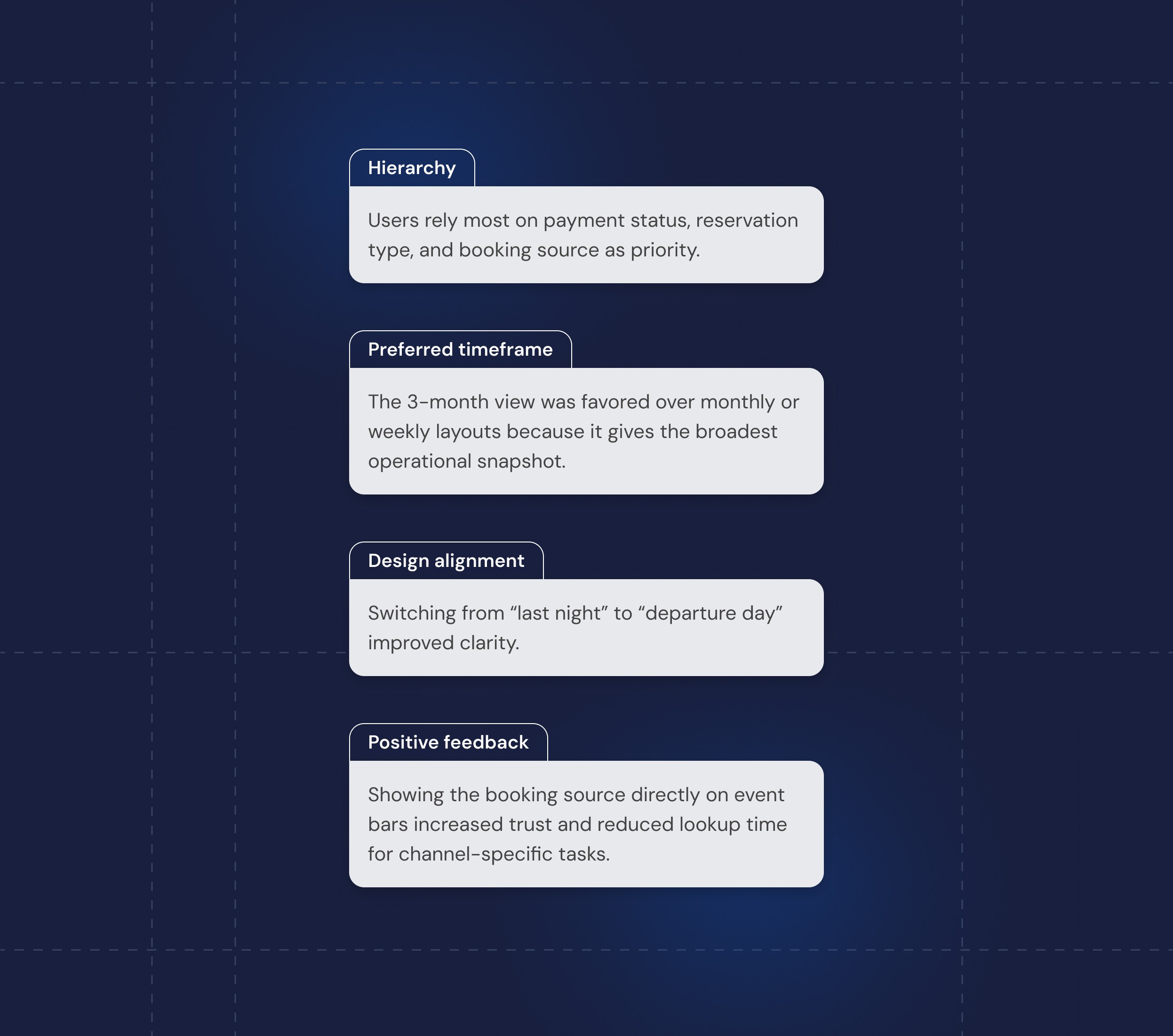
Concept usability test (April 2025, n=13), examined event bar clarity, time-frame preferences, and information hierarchy.
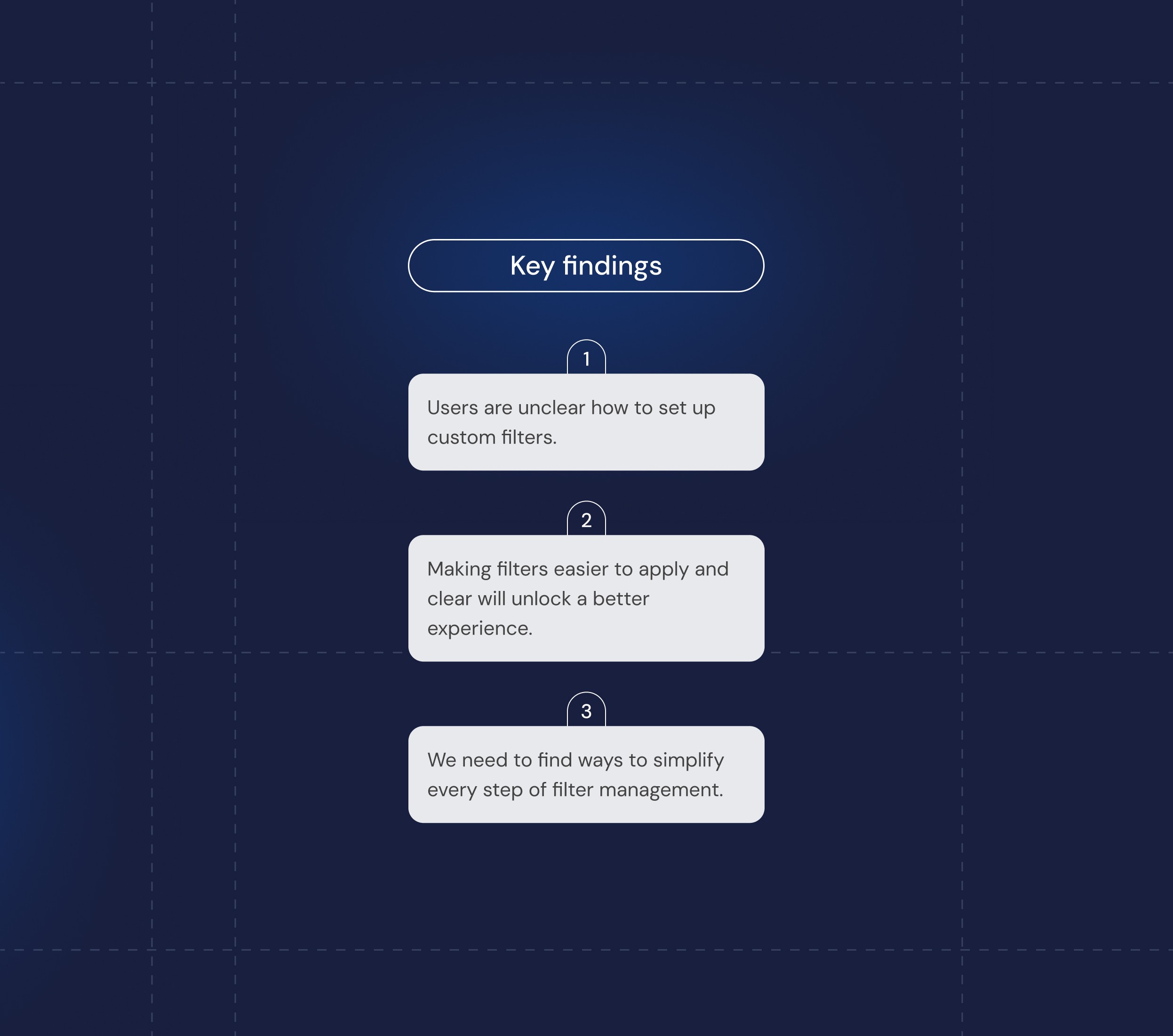
Filters card-sort study (May 2025, n=9), assessed how property managers prioritize filters for daily tasks.
“It looks fine. I can get used to it.” — a polite mask for users' frustration and fatigue.
Single screen access to information
Our goal was to eliminate excessive screen-switching, addressing the prior pain of clicking through multiple screens for simple tasks.
Most essential info is either directly visible or one click away.
Filters and search
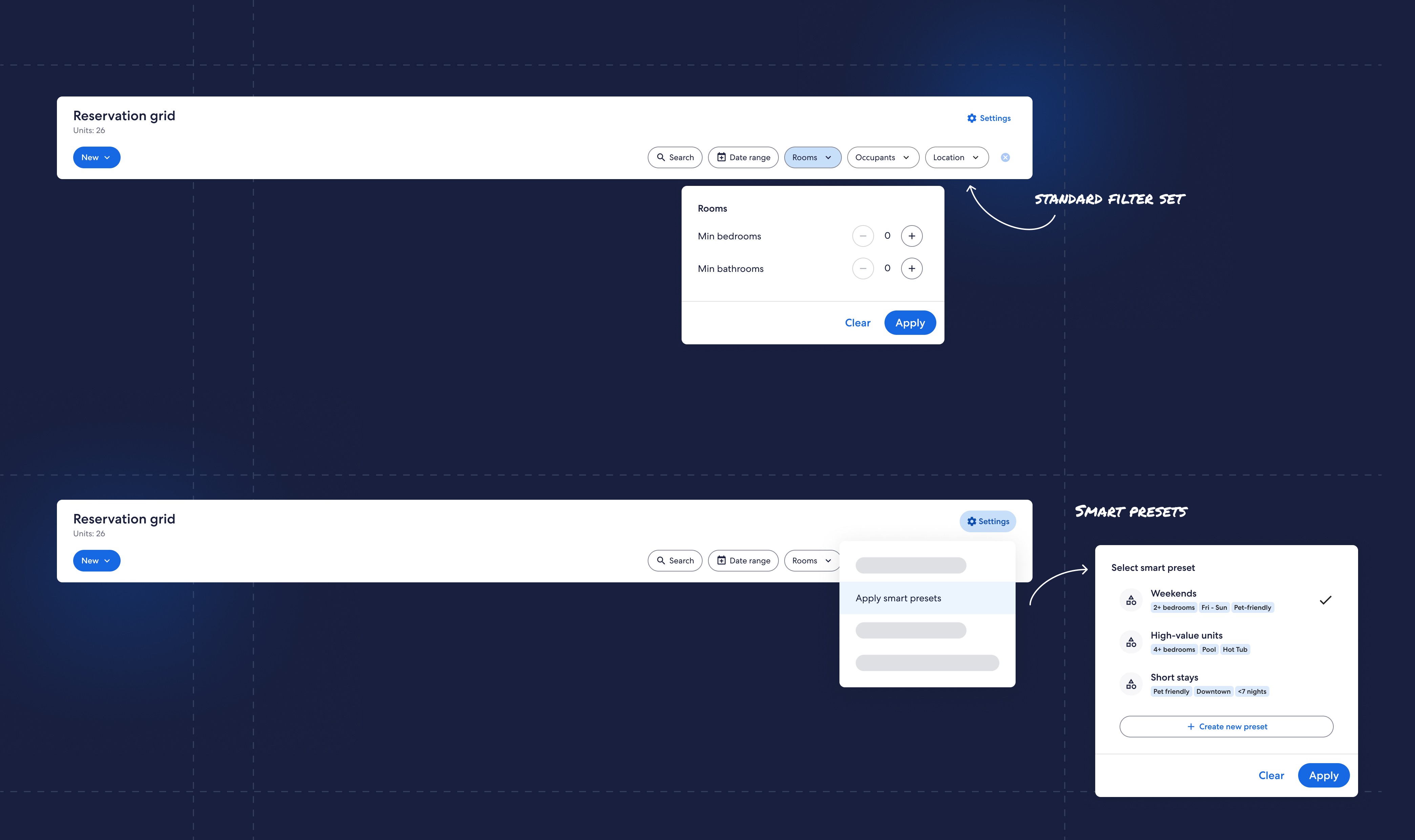
combined all filters into one clear, consistent panel with logical groups. Users can now save their favorite filter combinations as smart presets, reducing repetitive setup and making daily work faster.
Users can now save and reuse presets, and instantly see applied criteria without losing context.
I partnered with Product on scope definition, with Engineering on feasibility and performance trade-offs, and with Strategy on aligning UX metrics to 2025–26 OKRs. I organised frequent Design QA sessions and Figma critiques that kept everyone aligned.
Leading this initiative taught me that modernizing enterprise UX is about restoring cognitive flow. Success depended on ruthless prioritization, shared ownership with engineers, and a willingness to trade perfect polish for scalable simplicity.
Users now locate availability and act within seconds, cutting interaction steps by ~40%.
Early test results scored >90% “easy to use” on DUET metrics.
AI features - introduce intelligent recommendations for units, pricing, and availability based on performance data.
Event bar customization, that allows users tailor how events are displayed.
Measure impact and iterate - track clickstream and DUET metrics to validate usability and build user trust.
Looking back, starting the Reservation Grid redesign after setting Escapia’s design foundations would have led to a more unified, scalable, and consistent experience.
Related work