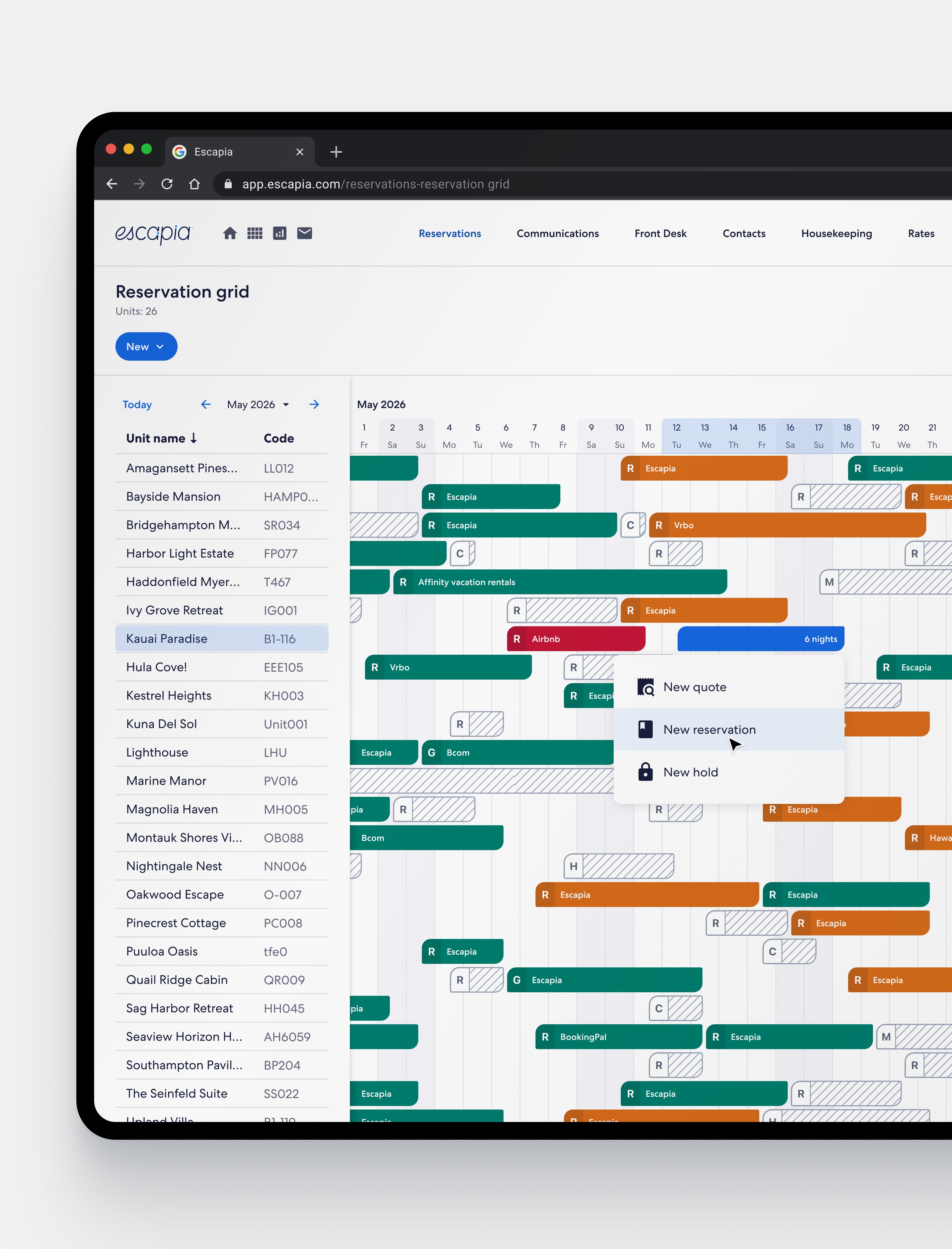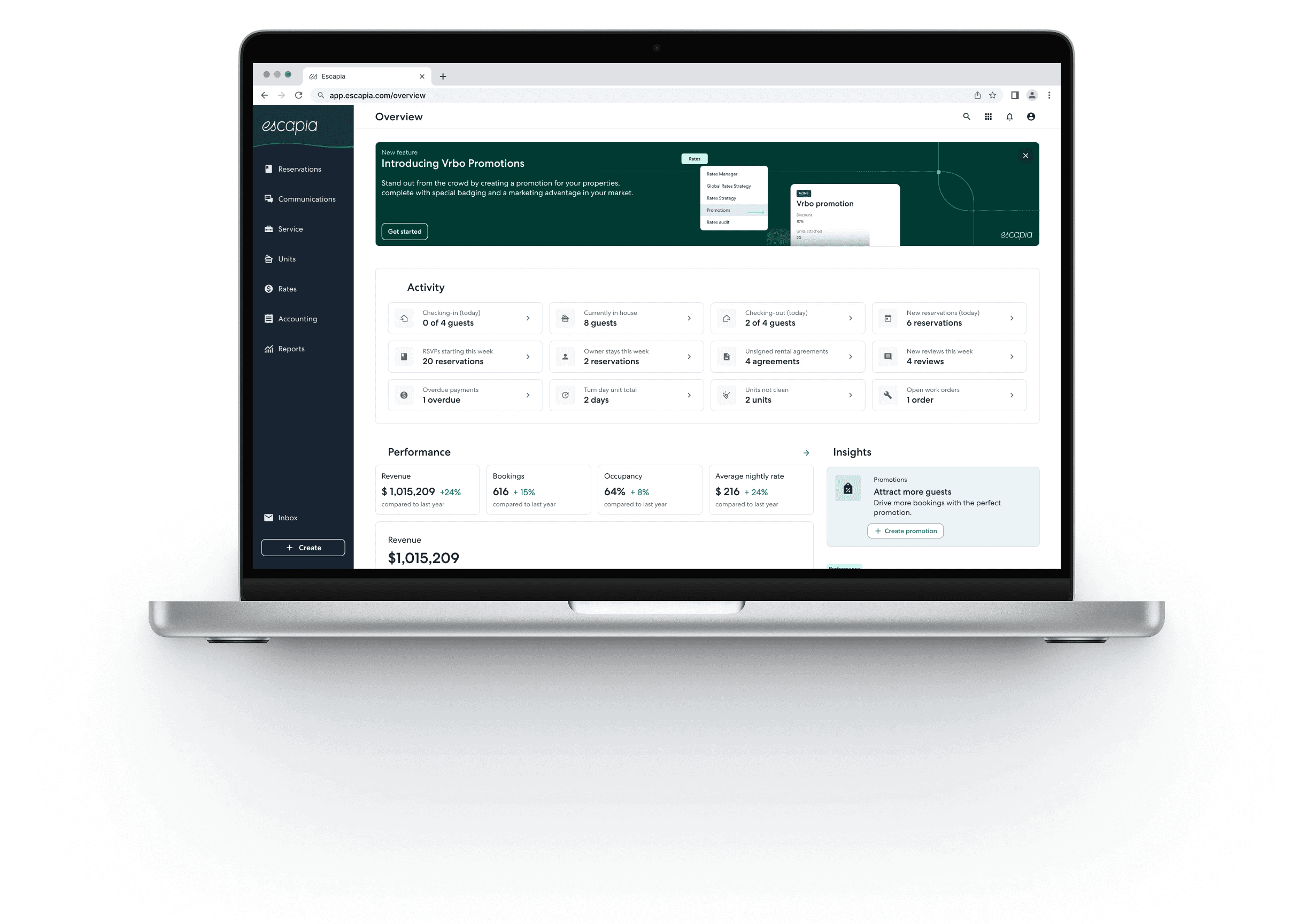
Escapia, Expedia Group’s property-management platform, has invested in redesigning key workflows using the Expedia Group Design System. However, old infrastructure, fragmented design systems, and outdated UI continued to create inconsistent, confusing user experiences.
Company
Escapia (Expedia Group)
Date
July - September 2025
Team
3 Senior UX Designers (including me) + Design Leaders
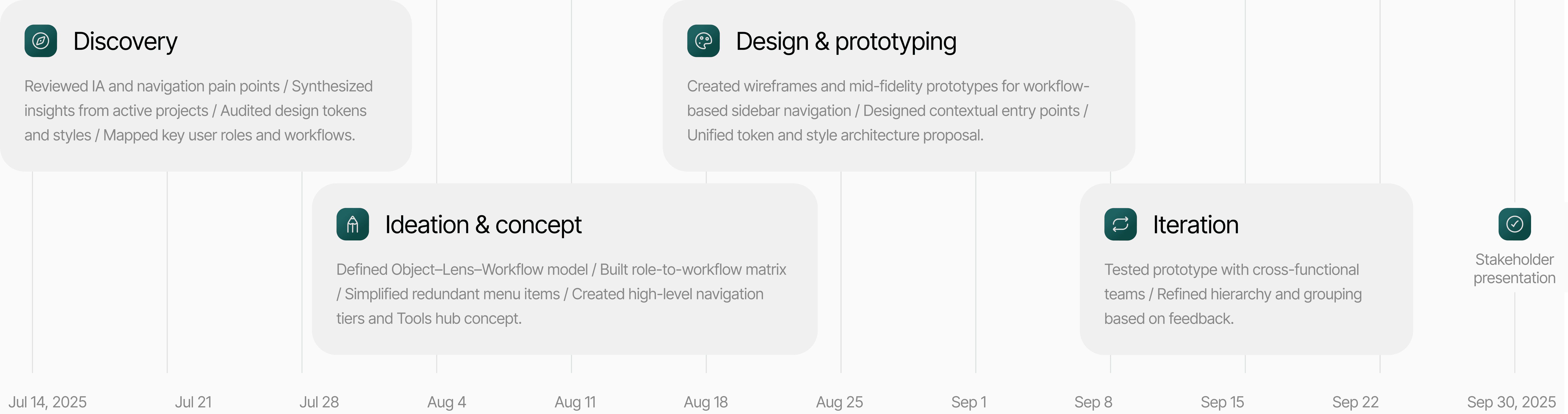
As part of the XD team, I worked on a design-driven initiative to reimagine Escapia’s navigation structure.
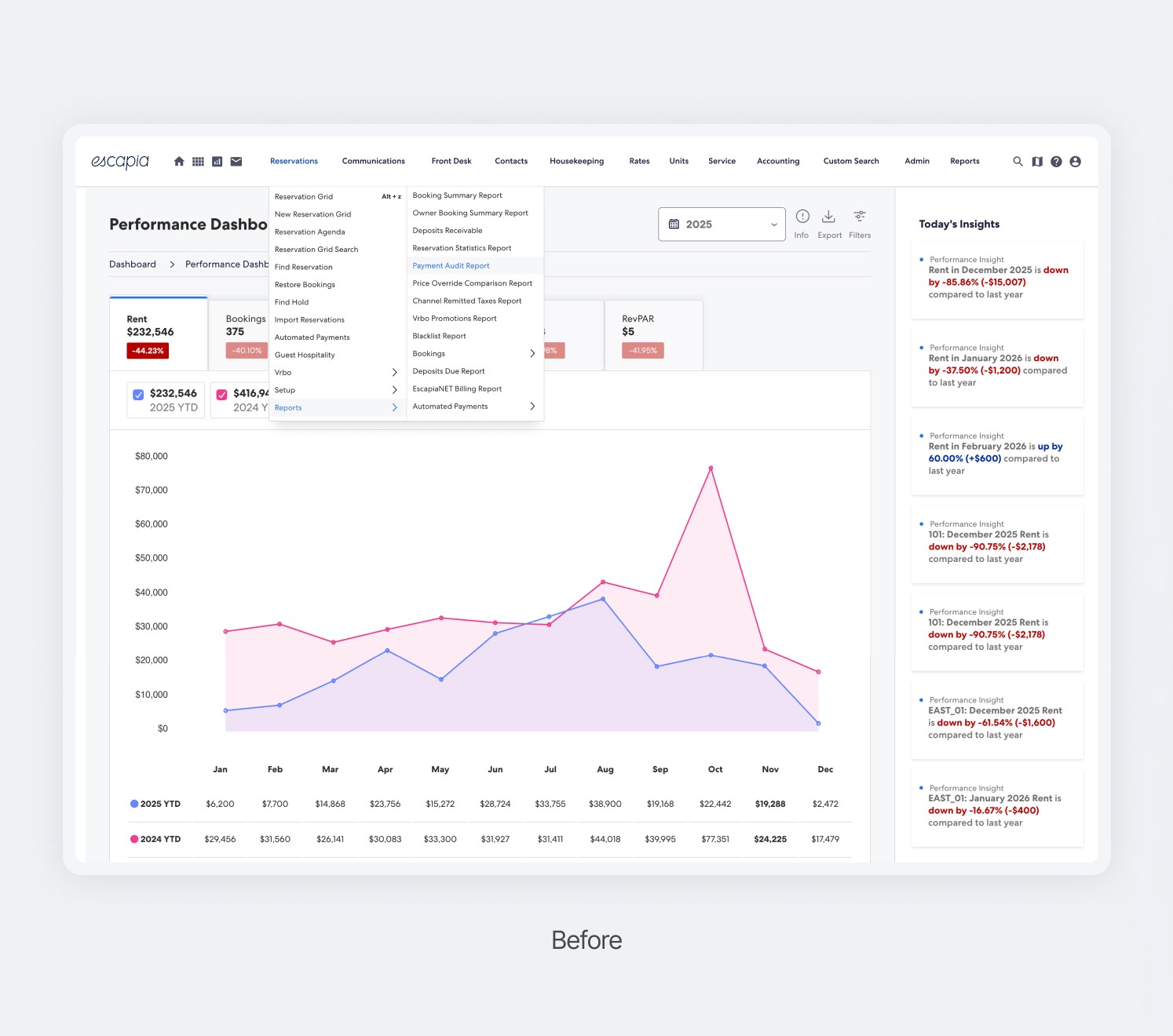
46% of lost accounts attributed UX issues as the primary driver
UX issues
Poor discoverability, increased onboarding complexity, general inconsistency across platform.
Technical issues
Token inheritance and mapping errors, multiple parallel design systems, accumulating design and tech debt with each new feature release.
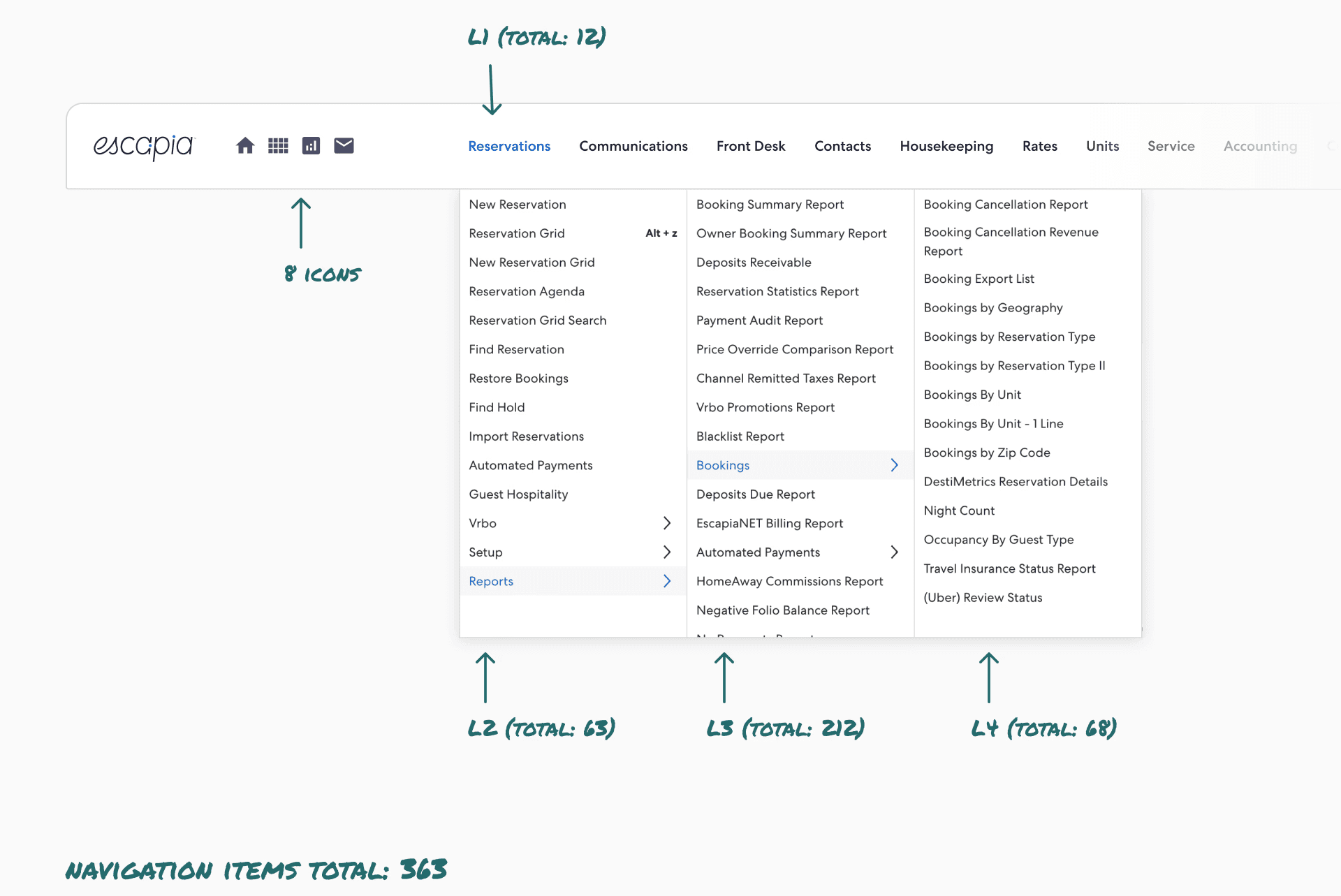
"Our navigation is a labyrinth"
Escapia’s navigation had grown into a four-tier dropdown structure (L1–L4) with over 300+ sub-pages scattered across different modules. All new features were inheriting the same underlying problems, deepening the debt rather than solving it.
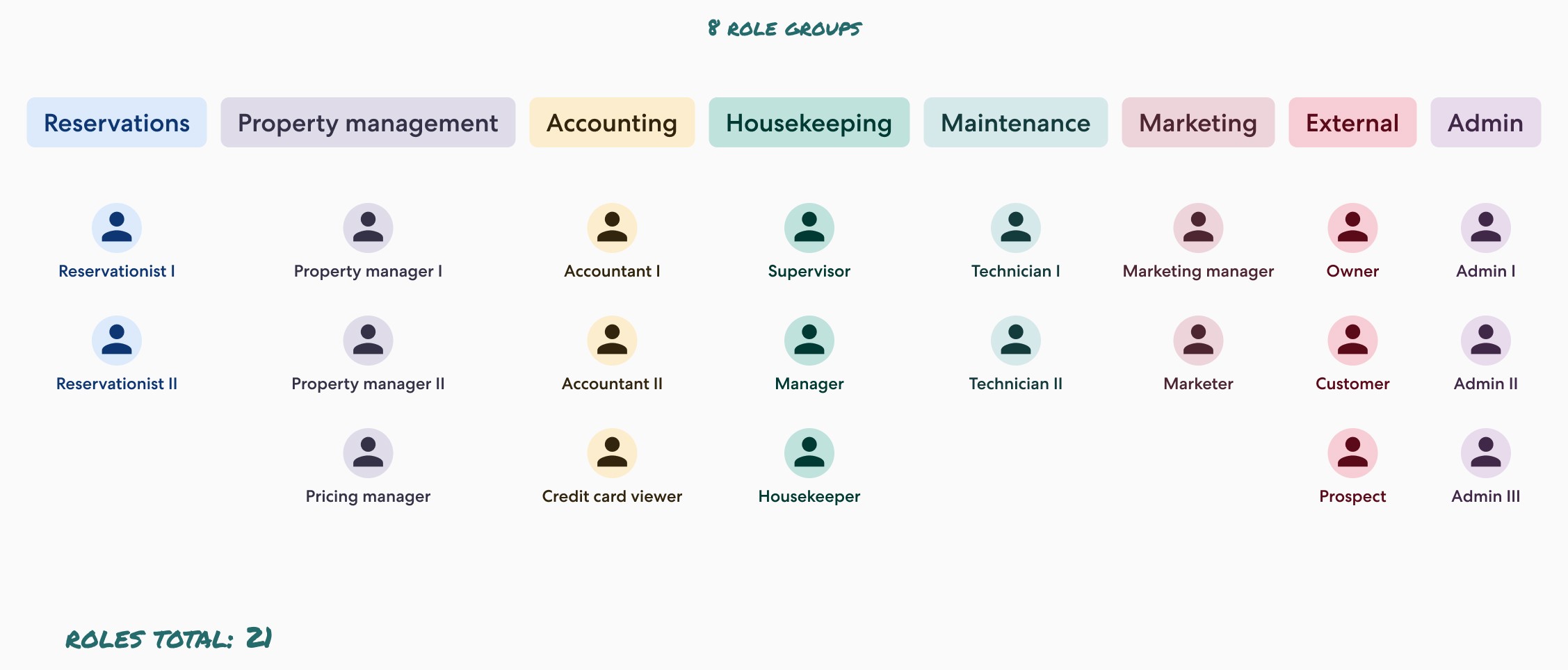
Fragmented roles leading to performance loss
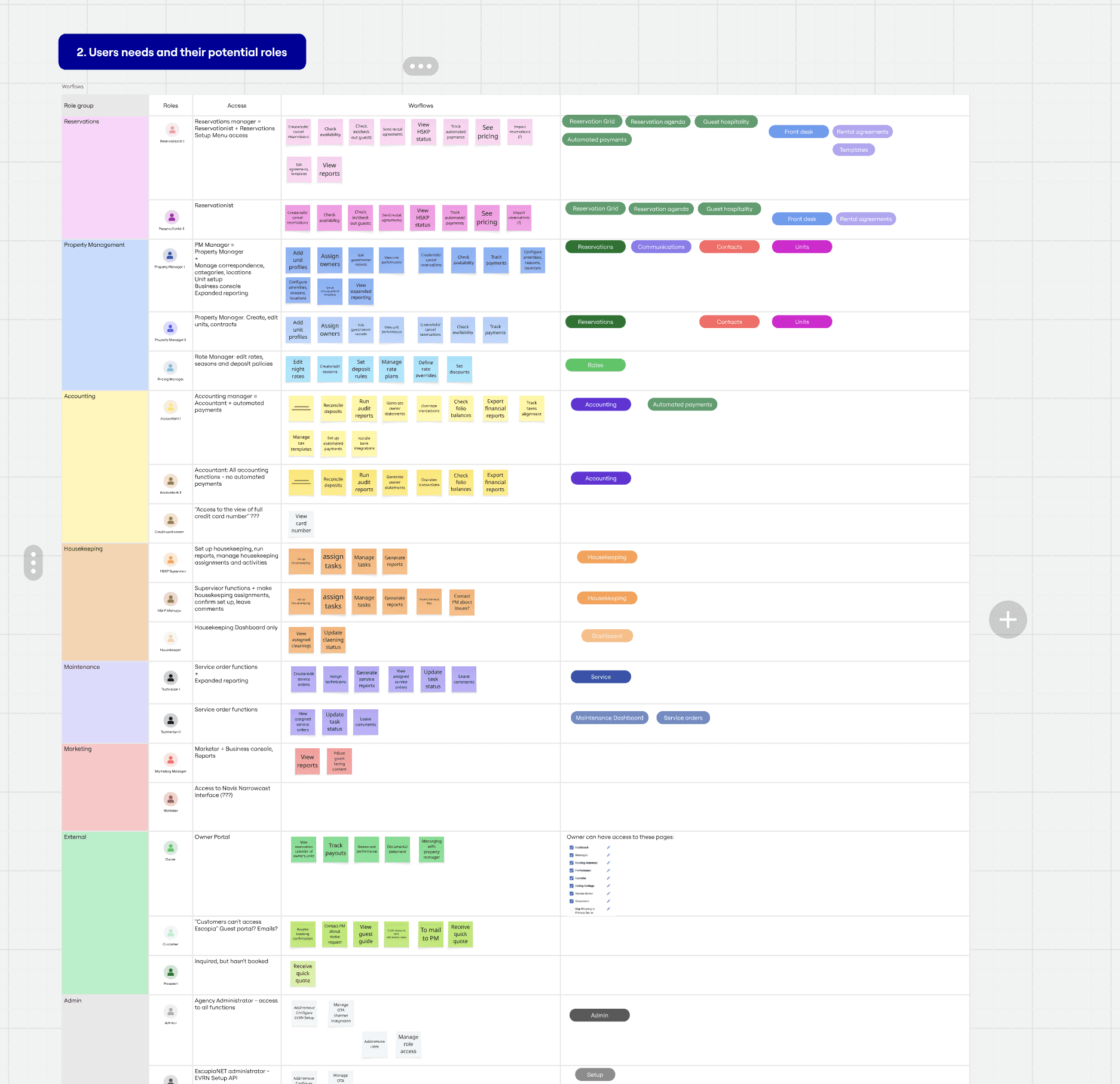
Escapia had 8 role groups and 21 total roles, but many were repetitive, undocumented, and lacked a consistent hierarchy, making it difficult to design scalable, role-based navigation and permission models.
This was a cross-initiative exploration led entirely by the XD team to shape the product’s long-term direction.
Gathering insights
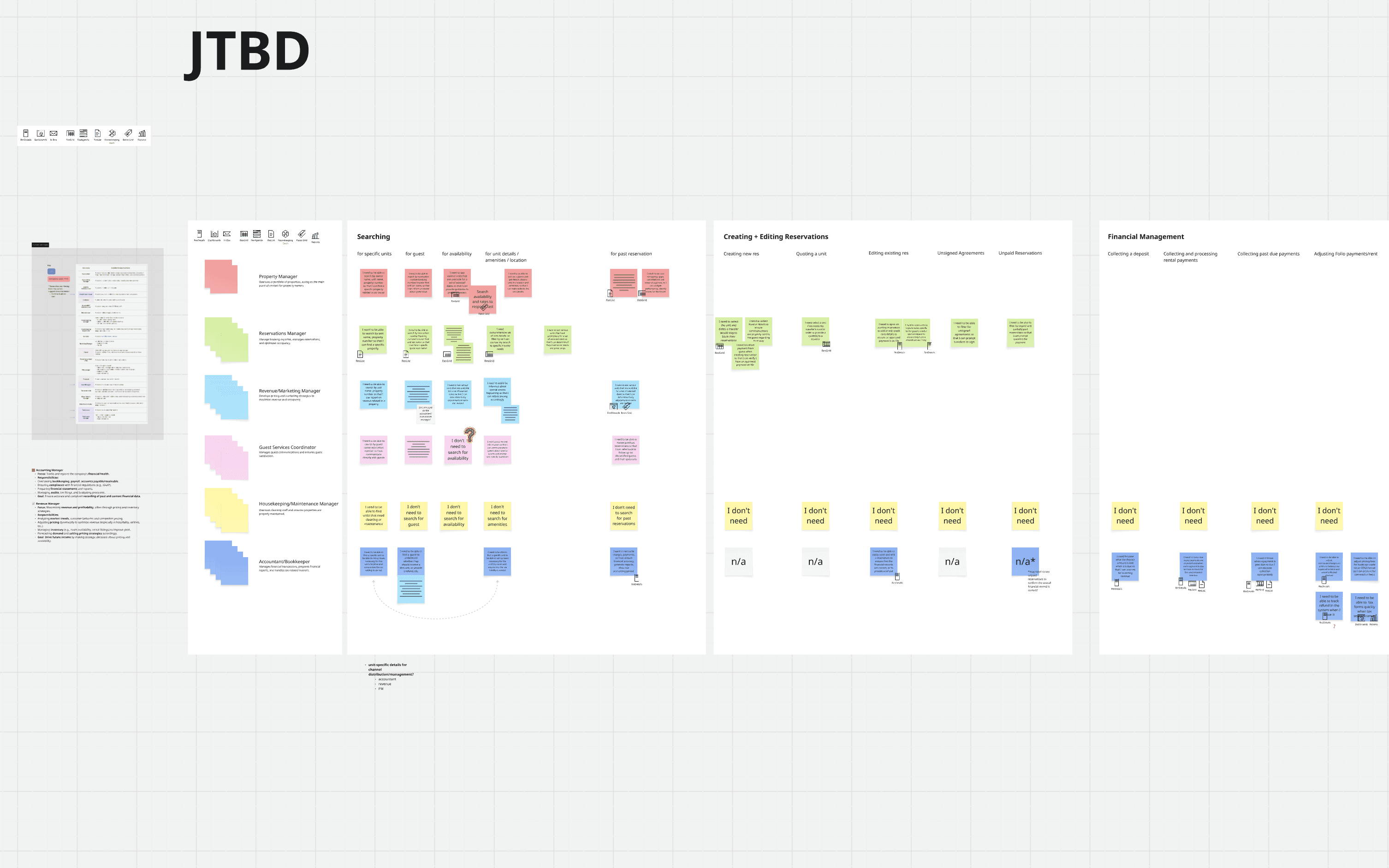
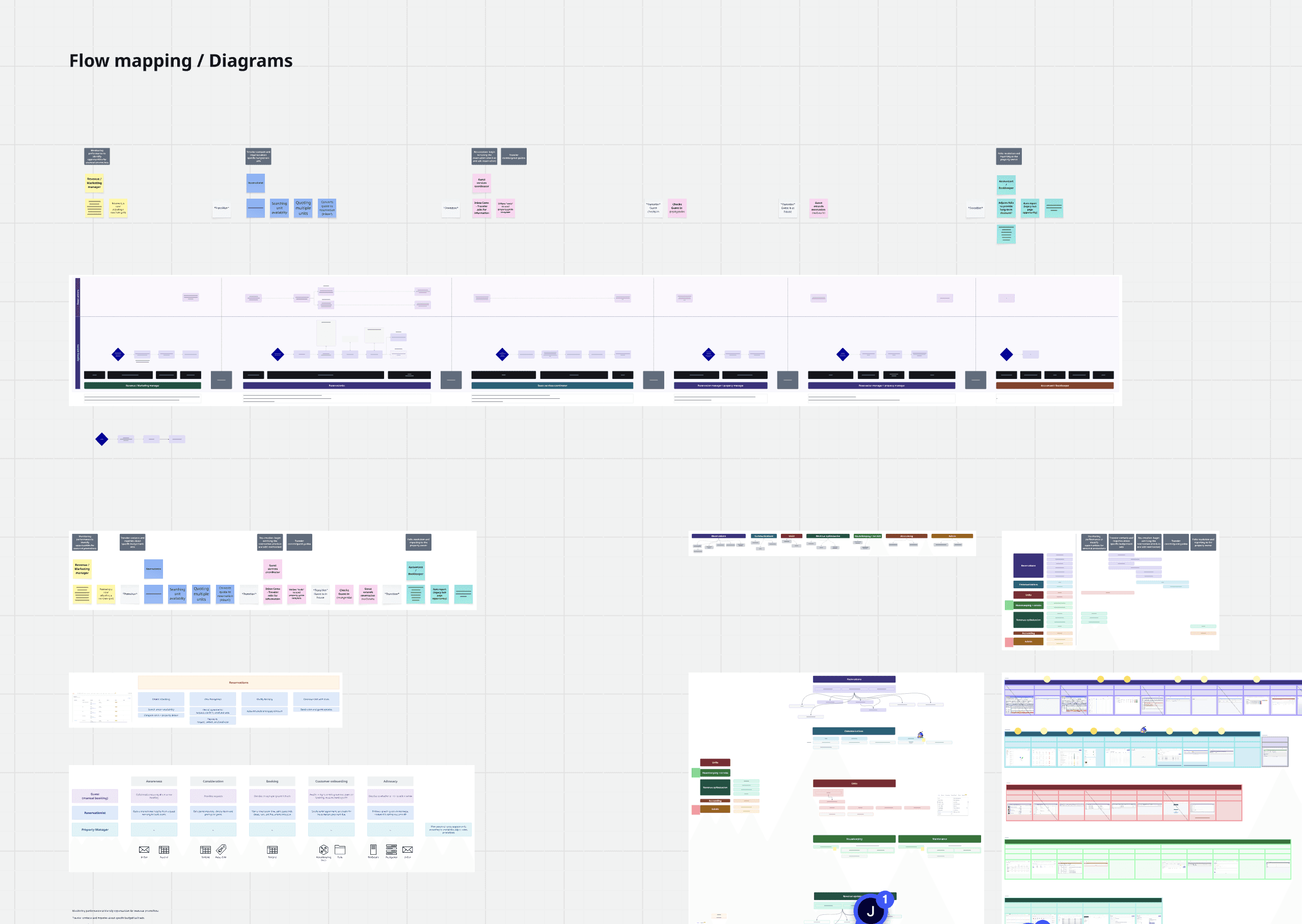
We consolidated insights from prior research across Escapia projects and mapped user journeys for 8 role groups and 21 total roles. Their workflows vary dramatically in pace and cognitive load, but all share a common pattern: multitasking across multiple screens while managing live operational data.
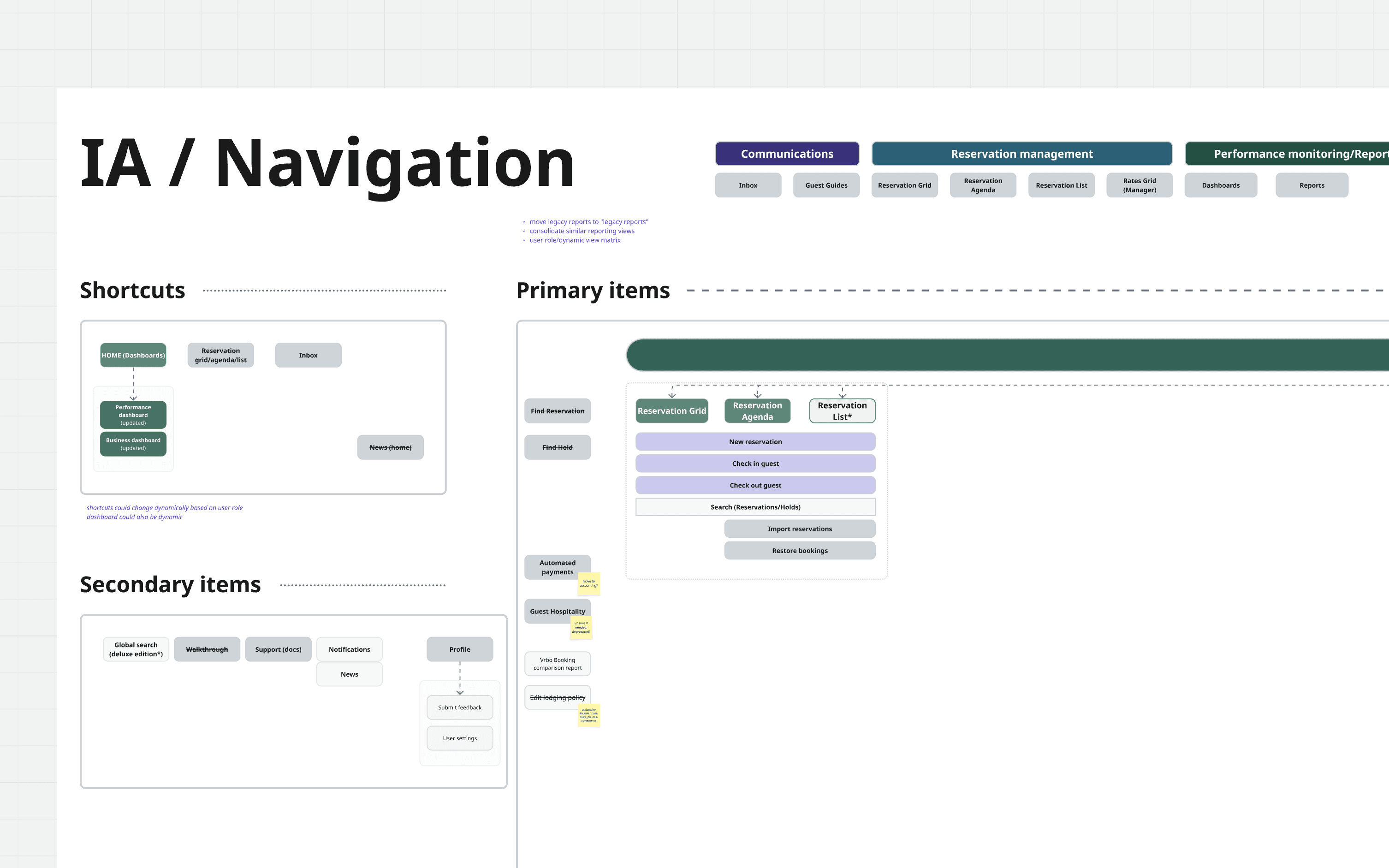
Exploring navigation concepts
We explored several navigation layouts to see how users move between Reservations, Rates, and Accounting without losing context. Each version tested what happens when secondary navigation collapses, how much space the grid needs, and whether users rely more on left-anchored memory or top tabs.
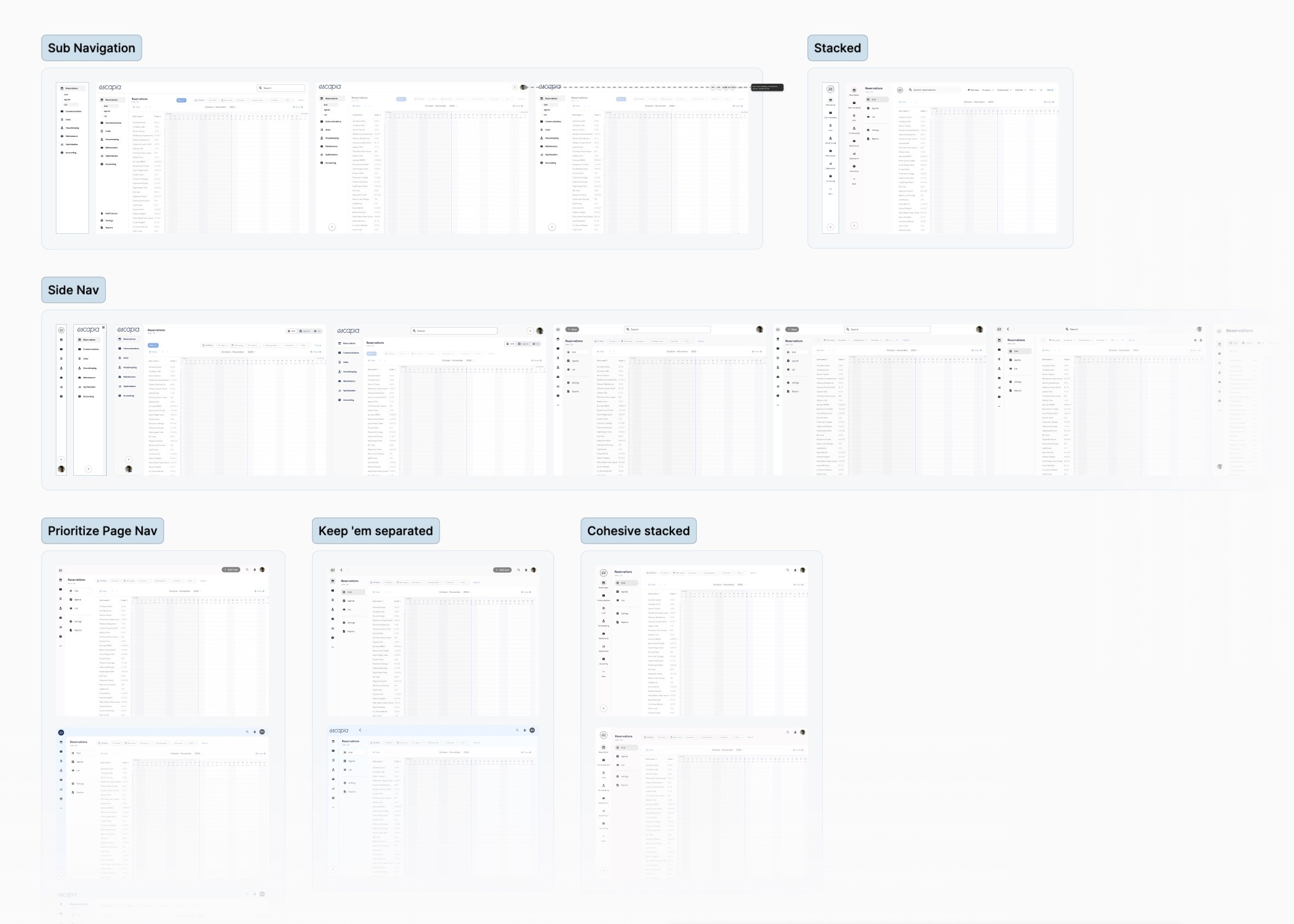
Vertical, role-based sidebar
Replaced the 4-tier dropdown with a workflow-oriented vertical navigation organized by role and workflow. Each section reflects how users work, not how the system is built.
Object–Lens–Workflow model
A new IA concept linking data objects to their most common lenses (Reservation Grid, Agenda, List) and associated workflows (Reservations, Check-ins, Forecasting).
Tools hub for quick access
Created a dedicated Tools entry point to surface utilities (custom promotions, templates, filters) from any context, reducing time spent hunting through menus.
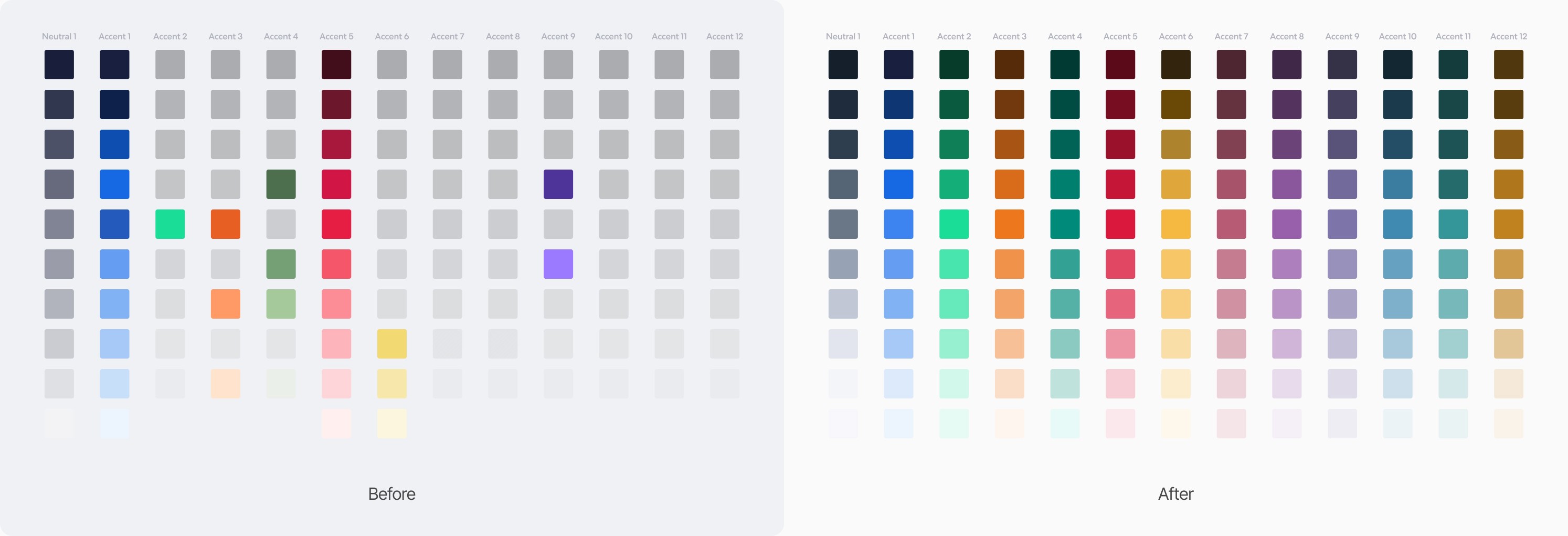
Developers reported over 60% of visual inconsistencies were caused by duplicated or outdated color tokens.
Simplified visual system
Unified styles and tokens under Expedia Group component library, rationalized unused swatches, and established scalable color hierarchy for accessibility and consistency.
Contextual entry points
Introduced contextual entry points so users no longer have to navigate away — for example, they can create a new promotion from wherever they are.
Design team presented the concept to Escapia leadership (Operations, Product, and Engineering) to align on the 2026 roadmap and prioritize navigation modernization.
Designing through narrative and real scenario
We framed the concept through storytelling, building a scenario that followed a property manager’s real workflow - from creating a promotion to managing reservation. This narrative approach helped stakeholders visualize how the redesigned navigation and tools work together in context, not as isolated screens.
Driving a design-led initiative required storytelling, data grounding, and the courage to challenge legacy foundations. New navigation redefined Escapia’s information architecture direction and reinforced the design team’s role as a strategic partner in shaping product vision.
Foundational model
Established for workflow-based navigation scalable across Escapia's ecosystem, that reduced redundancy by ~30%.
Established and adopted as the foundation for Escapia's 2026 roadmap, that reduced average click depth by ~40% in prototype testing.
Unified token&style architecture
Related work